It is 5:30 PM. Dinner is half-made, the baby is crying, and your toddler is clinging to your leg demanding attention. You reach for the tablet, press play on a cartoon, and suddenly you have twenty minutes of peace. You feel guilty about it. You know you should probably limit screens. But honestly? Some days, survival mode is the best you can manage.
Take a deep breath. You are not ruining your child. But you are right to think carefully about screen time, especially for toddlers and preschoolers whose brains are developing at an astonishing rate. The choices you make about screens during these early years shape attention spans, language development, emotional regulation, and even your child's relationship with boredom and creativity.
This guide will give you practical, grace-filled boundaries rooted in both research and biblical wisdom. Not because screens are evil, but because your child's early years are precious and brief, and what fills their eyes and ears during this season matters deeply.
"Above all else, guard your heart, for everything you do flows from it."
— Proverbs 4:23 (NIV)
🧒Why Screen Time Matters for Young Brains
Between birth and age five, your child's brain forms more than one million new neural connections every second. This is the most rapid period of brain development in your child's entire life. What your child experiences during these years—the conversations they hear, the play they engage in, the sensory world they explore—literally shapes the architecture of their brain.
Screens are not inherently destructive, but they do displace other activities that are critical for development. Every hour a toddler spends watching a screen is an hour they are not building with blocks, running outside, having conversations with you, or learning to be bored and then finding something to do about it. That last one matters more than we realize—boredom is the birthplace of creativity and self-directed play.
What Research Tells Us
- •The American Academy of Pediatrics recommends no screen time for children under 18 months (except video calls) and no more than one hour per day for children 2-5.
- •Heavy screen use in toddlers is associated with delayed language development. Young children learn language best through live, back-and-forth interaction, not from screens.
- •Fast-paced, flashy content (most children's YouTube channels) has been linked to attention difficulties. Young brains adapt to constant stimulation and then struggle with slower-paced activities like reading and conversation.
- •Background TV disrupts play quality and parent-child interaction, even when no one is actively watching.
- •Interactive, slow-paced educational content (like Daniel Tiger or Sesame Street) can have modest benefits for children over 2—but only when watched with a parent who engages with the content.
💡A Word About Video Calls
Video calls with grandparents, deployed military parents, or long-distance family members are different from passive screen consumption. These are interactive, relational experiences. Even the AAP makes an exception for video calls at any age. FaceTime with Grandma is not the same as a YouTube binge.
📖Biblical Wisdom for Guarding Hearts and Minds
Scripture does not mention screens, obviously, but it has much to say about what we allow into our hearts and minds—and by extension, what we allow into our children's hearts and minds. As parents, we are the gatekeepers of our home. That is not a burden; it is a calling.
"Finally, brothers and sisters, whatever is true, whatever is noble, whatever is right, whatever is pure, whatever is lovely, whatever is admirable—if anything is excellent or praiseworthy—think about such things."
— Philippians 4:8 (NIV)
Philippians 4:8 is a powerful filter for children's media. Before pressing play, ask yourself: Is this true? Is it noble? Is it pure? Does it reflect the values we are trying to build in our home? This does not mean every show needs to be explicitly religious. A program that models kindness, problem-solving, friendship, and honesty can reflect godly values without mentioning God directly.
Deuteronomy 6 reminds us that teaching our children about God happens "when you sit at home and when you walk along the road, when you lie down and when you get up." That kind of constant, woven-into- life discipleship requires presence. It requires being available for the random question, the unexpected teachable moment, the long walk where your preschooler asks, "Who made the clouds?" Screens can quietly steal those moments if we are not paying attention.
"Be very careful, then, how you live—not as unwise but as wise, making the most of every opportunity."
— Ephesians 5:15-16 (NIV)
⏰Recommended Screen Time Limits by Age
These guidelines are based on both pediatric recommendations and common-sense parenting. They are starting points, not commandments. Your family may adjust based on your circumstances, your child's temperament, and the season of life you are in.
Under 18 Months
Recommendation: No screen time except video calls with family. Babies and young toddlers learn through touch, movement, sound, and face-to-face interaction. Screens simply cannot replicate the richness of real-world experience for a developing brain.
Toddlers (18 Months to 3 Years)
Recommendation: 30 minutes or less per day of high-quality content, watched with a parent. At this age, children cannot learn effectively from screens without adult interaction. Sit with them, talk about what you see, ask questions, and connect the content to real life. "Look, Daniel Tiger is feeling sad. What do we do when we feel sad?"
Preschoolers (3 to 5 Years)
Recommendation: One hour or less per day of high-quality content. Co-viewing is still valuable but not always necessary at this age. Prioritize slow-paced, educational, or faith-based programming. Avoid autoplay features that turn one episode into an hours-long binge.
✨The Timer Trick
Use a visual timer (a sand timer or kitchen timer) so your child can see when screen time is ending. Say, "When the timer goes off, we turn off the tablet." This gives them a sense of control and predictability, which reduces meltdowns at shutoff time. Warn them a few minutes before: "Five more minutes until the timer goes off."
🎬Choosing Wholesome Content
Not all screen time is created equal. Thirty minutes of a slow-paced, educational program is very different from thirty minutes of rapid-fire YouTube clips with flashing colors and screaming narrators. Content quality matters just as much as duration.
What to Look For
- •Slow pacing that matches a child's natural processing speed
- •Characters who model kindness, patience, honesty, and problem-solving
- •Content that invites participation—asking questions, encouraging movement, or prompting responses
- •Stories with clear moral lessons that align with biblical values
- •Programming created by child development experts, not just content creators chasing views
- •Age-appropriate themes without violence, romantic content, or crude humor
What to Avoid
- •YouTube Kids autoplay (the algorithm drifts into strange, low-quality content quickly)
- •Unboxing videos and toy commercials disguised as entertainment
- •Fast-paced content with constant scene changes (overstimulates young brains)
- •Shows that model disrespect toward parents, sarcasm, or mean-spirited humor
- •Any content that frightens your child—even if other kids their age can handle it
- •Apps or games designed to be addictive with constant rewards, notifications, and pressure to keep playing
Recommended Christian and Wholesome Media
- •VeggieTales and VeggieTales in the House—Biblical values with humor that toddlers and preschoolers love
- •The Bible App for Kids—interactive Bible stories with simple, engaging animation
- •What's in the Bible? by Phil Vischer—theology for young kids from the VeggieTales creator
- •Daniel Tiger's Neighborhood—social-emotional learning based on Mister Rogers' principles
- •Bluey—a secular show that models exceptional family relationships, imaginative play, and gentle parenting
- •Sesame Street—decades of research-backed educational content for preschoolers
- •Minno (streaming service)—a curated library of Christian children's content
Preview Before You Press Play
Watch at least one episode of any new show before your child sees it. Check Common Sense Media ratings for age-appropriateness. Ask other Christian parents what their kids watch. And remember: just because something is labeled "Christian" does not automatically mean it is good content. Quality matters in faith-based media too.
🎨Screen-Free Activities That Toddlers and Preschoolers Love
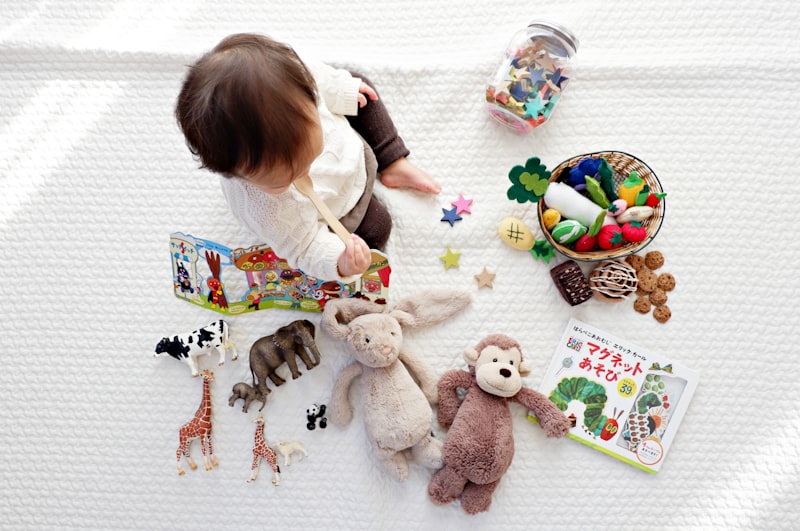
The best alternative to screen time is not a different screen—it is a richer real-world experience. Young children are wired for hands-on exploration, imaginative play, and connection with the people they love. Here are dozens of ideas for those moments when your first instinct is to hand over the tablet.
Active Play
- •Dance party in the living room—put on worship music and let loose
- •Obstacle courses with couch cushions, pillows, and blankets
- •Backyard exploration: digging in dirt, collecting rocks, watching bugs
- •Playground time—climbing, swinging, and running burn energy and build motor skills
- •Simple ball games: rolling, tossing, kicking
- •Puddle jumping after rain (yes, let them get muddy)
Creative Play
- •Playdough (homemade is easy and cheap)
- •Coloring, painting, and stickers
- •Building with blocks, Mega Bloks, or Duplos
- •Dress-up and pretend play
- •Sensory bins: rice, dried beans, water beads, sand with scoops and cups
- •Simple baking projects—stirring, pouring, and decorating cookies
Quiet and Faith-Building Activities
- •Reading together—aim for at least 20 minutes daily; board books for toddlers, picture books for preschoolers
- •Listening to Bible stories on audio (this counts as "screen-free" media)
- •Simple prayers: thank God for three things before meals or bedtime
- •Looking at family photos and telling stories about each person
- •Playing with puzzles
- •Singing worship songs and hymns together—kids absorb theology through music
- •Nature walks with a purpose: "Let's find five things God made today"
"I will meditate on all your works and consider all your mighty deeds."
— Psalm 77:12 (NIV)
😤Handling Tantrums When the Screen Goes Off
Let us be honest: the hardest part of screen time limits is not setting them. It is enforcing them. When you turn off the tablet, your toddler may scream, cry, throw themselves on the floor, and act as though you have committed a grave injustice. This is normal. It does not mean your boundaries are wrong. It means they are working.
Screens are designed to be stimulating and rewarding. When that stimulation is removed, young children experience a kind of withdrawal—their brains were flooded with dopamine, and now reality feels boring by comparison. The meltdown is their immature brain struggling with the transition. It is not defiance. It is development.
⚠️When Screens Become a Bargaining Chip
Avoid using screen time as a reward or removing it as punishment for unrelated behavior. When screens become the most valuable currency in your home, you have given them too much power. Screens should be a small, predictable part of the day—not the thing your child lives for and you use as leverage.
👨👩👧Modeling Healthy Screen Habits Yourself
This is the section none of us want to read. Your toddler is watching you. They notice when you pick up your phone at the dinner table. They see you scrolling while they are trying to show you something. They absorb the message: the screen is more interesting than I am.
We cannot expect our children to have a healthy relationship with screens if we do not model one ourselves. This does not mean you can never look at your phone. It means being intentional about when and how you use screens in front of your young children.
Practical Steps for Parents
- •Put your phone away during meals, playtime, and bedtime routines. These are sacred connection times.
- •Create phone-free zones in your home: the dinner table, the playroom, the kids' bedrooms.
- •When your child is talking to you, put the phone down and make eye contact. Every time. This teaches them they matter more than any notification.
- •Narrate your phone use when needed: "I need to check this message from Daddy. I'll be done in one minute." This models transparency.
- •Turn off unnecessary notifications. The constant buzzing and dinging models distraction.
- •Read physical books in front of your children. Let them see you enjoying something that does not require a screen.
- •Consider a family media plan that applies to parents too—not just the kids.
"Train up a child in the way he should go; even when he is old he will not depart from it."
— Proverbs 22:6 (ESV)
🌈Grace for Imperfect Days
There will be sick days when the TV runs for hours. There will be road trips where the tablet is the only thing keeping everyone sane. There will be seasons—newborn sibling, illness, job loss, move—where screen time limits go out the window and survival becomes the goal. That is okay.
A single day of extra screen time will not derail your child's development. What matters is the overall pattern, the general direction, the habits you are building week by week and month by month. If today was a three-hour-TV kind of day, forgive yourself, reset tomorrow, and move on.
God gave you these children knowing exactly who you are—your strengths and your weaknesses, your best days and your worst. He trusts you with this work even when you do not trust yourself. The fact that you are reading this article, thinking about screen time, and wanting to be intentional means you are already doing better than you think.
✅You Are Doing Important Work
Every time you get on the floor and play with your child instead of handing them a device, you are making a deposit in their development. Every time you read a book together, build a tower together, or take a walk together, you are giving them something no screen can provide: you. Your presence is the most powerful influence in your child's life. No app, program, or video will ever compete with a parent who shows up.
"But Jesus called the children to him and said, 'Let the little children come to me, and do not hinder them, for the kingdom of God belongs to such as these.'"
— Luke 18:16 (NIV)
The Bottom Line on Screen Time for Young Children
Less is more. Quality over quantity. Co-watch when you can. Set limits and hold them with calm consistency. Fill the rest of their day with play, books, nature, conversation, and faith. Model the habits you want them to develop. Give yourself grace on the hard days. And remember: the goal is not perfection. The goal is raising children who know the difference between a screen and a sunset, and who choose the sunset.