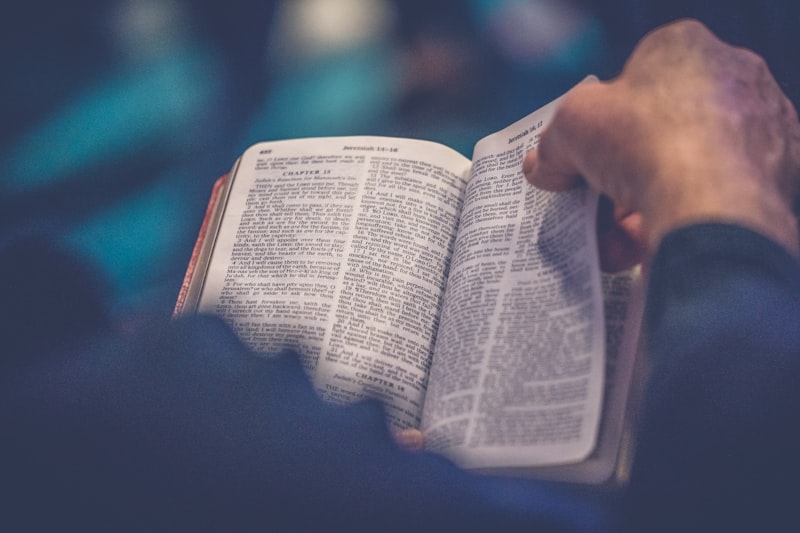
Walk into any Christian bookstore or browse an online retailer and you will find hundreds of Bible options: different translations, study editions, children's versions, journaling Bibles, and devotional Bibles, each one promising to be the perfect fit. For a parent trying to choose the right Bible for their family, the sheer number of options can feel paralyzing.
The goal of this guide is to cut through the confusion and help you make confident choices about which Bibles serve your family best at every stage. Because the most important Bible is the one that actually gets read. Getting kids to that point often starts with helping them fall in love with Scripture rather than simply handing them a book to check off a list.
"All Scripture is God-breathed and is useful for teaching, rebuking, correcting and training in righteousness."
— 2 Timothy 3:16 (NIV)
Choosing a Family Bible: Understanding Bible Translations
All English Bibles are translations from the original Hebrew, Aramaic, and Greek texts. No translation is perfect, and each one makes trade-offs between word-for-word accuracy and readability. Understanding this spectrum helps you choose wisely.
Word-for-Word (Formal Equivalence)
These translations prioritize staying as close to the original language structure as possible. They are excellent for deep study but can be harder for young readers or new believers to understand.
- •ESV (English Standard Version): Highly respected for accuracy and literary beauty. Widely used in Reformed and evangelical churches.
- •NASB (New American Standard Bible): One of the most literal English translations. Excellent for word studies but reads more formally.
- •KJV (King James Version): The historic English Bible with magnificent prose. Archaic language can be a barrier for children.
Thought-for-Thought (Dynamic Equivalence)
These translations aim to communicate the meaning of the original text in natural, modern English. They are more accessible for everyday reading and family devotions.
- •NIV (New International Version): The most widely read modern translation. Balances accuracy and readability exceptionally well.
- •NLT (New Living Translation): Very readable and clear. An outstanding choice for family read-alouds and new readers.
- •CSB (Christian Standard Bible): A newer translation that sits between the ESV and NIV in approach. Gaining popularity for its clarity.
Simplified and Children's Translations
- •NIrV (New International Reader's Version): The NIV simplified for early readers. Uses shorter sentences and simpler vocabulary.
- •ICB (International Children's Bible): Written at a third-grade reading level. An excellent first 'real' Bible for kids.
- •ERV (Easy-to-Read Version): Clear, simple English suitable for children and English language learners.
💡No Translation Is Inspired
Only the original manuscripts are inspired by the Holy Spirit. Every English translation is the work of skilled scholars doing their best to faithfully render God's Word. Do not let debates about translations become a barrier to actually reading Scripture. A Bible read imperfectly in the NLT is infinitely better than an ESV left on the shelf.
Choosing a Bible by Age
"Like newborn babies, crave pure spiritual milk, so that by it you may grow up in your salvation."
— 1 Peter 2:2 (NIV)
Toddlers (Ages 1-3)
At this age, you are not looking for a Bible your child reads independently. You want a Bible storybook that introduces the major narratives of Scripture through simple words and vivid illustrations.
- •Board books with thick pages that survive being chewed and dropped.
- •Bright, engaging illustrations that capture attention during story time.
- •Simple retellings of key stories: Creation, Noah, Moses, David, Jesus' birth, death, and resurrection.
- •Top recommendations: The Beginner's Bible (board book edition), Baby's First Bible, and God Loves You board books.
Preschoolers (Ages 3-5)
- •Bible storybooks that cover more stories with slightly more detail.
- •Interactive elements: lift-the-flaps, stickers, or coloring pages alongside stories.
- •Look for storybooks that connect Old Testament narratives to Jesus. The Jesus Storybook Bible by Sally Lloyd-Jones does this beautifully.
- •Begin introducing simple memory verses with hand motions or songs.
Early Elementary (Ages 5-8)
- •Transition from Bible storybooks to an actual Bible text written at their reading level.
- •The NIrV and ICB are ideal translations for this age.
- •Look for editions with illustrations, maps, and brief introductions to each book.
- •Consider an Adventure Bible or a similar edition that includes fun facts, character profiles, and 'did you know' sidebars.
Upper Elementary (Ages 8-11)
- •A full-text Bible in NLT, NIV, or CSB that they can read confidently.
- •Study features become helpful: cross-references, brief book introductions, and a simple concordance.
- •This is a great age for journaling Bibles where children can write notes and draw in wide margins.
- •Begin using a Bible reading plan to build the habit of daily engagement.
Preteens (Ages 11-13)
- •Move toward an adult-quality translation: NIV, ESV, or CSB.
- •A study Bible with notes, maps, timelines, and theological explanations helps satisfy their growing curiosity.
- •Consider a devotional Bible that pairs daily readings with reflections written for their age group.
- •Encourage them to own and personalize their Bible with highlights and notes.
Teenagers (Ages 13-18)
- •A solid study Bible in NIV, ESV, NASB, or CSB. The ESV Study Bible and NIV Study Bible are both excellent.
- •Consider a Bible with apologetics notes that address the questions teens encounter about faith and truth.
- •Bible apps like YouVersion can supplement the physical Bible with reading plans, audio, and community features.
- •A thin-line or compact Bible they can carry in a backpack encourages daily reading.
Bible Formats: Physical, Digital, and Audio
"The grass withers and the flowers fall, but the word of our God endures forever."
— Isaiah 40:8 (NIV)
Physical Bibles
There is significant research suggesting that reading comprehension and retention are higher with physical books than screens. A physical Bible also allows highlighting, note-taking, and the tactile experience of turning pages that many people find helps them engage more deeply.
Digital Bibles
Bible apps like YouVersion and Blue Letter Bible offer free access to dozens of translations, reading plans, and study tools. For teens who are already on their phones, having the Bible accessible on the same device can increase frequency of reading. The risk, of course, is distraction from notifications.
Audio Bibles
Audio Bibles are tremendously underused in families. Playing the Bible during car rides, at mealtimes, or before bed exposes children to Scripture passively and consistently. Apps like Dwell and the YouVersion audio feature offer high-quality recordings in multiple translations.
✨Both Physical and Digital
The best approach for most families is a primary physical Bible supplemented by a Bible app. Use the physical Bible for focused reading and study. Use the app for quick reference, reading plans, and listening on the go.
What About Children's Bible Storybooks vs. Real Bibles?
A common question parents ask is when to transition from Bible storybooks to an actual Bible text. The answer depends on your child's reading level and maturity, but here is a general guideline.
⚠️Watch for Theological Drift
Not all children's Bible storybooks are created equal. Some significantly alter biblical narratives, add details that are not in Scripture, or reduce complex truths to oversimplified morals. Before purchasing a storybook Bible, read through several stories to ensure it faithfully represents God's Word.
Making the Bible a Family Centerpiece
"Fix these words of mine in your hearts and minds; tie them as symbols on your hands and bind them on your foreheads."
— Deuteronomy 11:18 (NIV)
The Family Bible Shelf
Create a visible spot in your home, a shelf, a basket, or a special table, where every family member's Bible lives. Make it accessible, not locked in a bedroom drawer. When the Bible is visible and within reach, it gets picked up more often. Consider placing it near where your family gathers, like the kitchen or living room.
- •Give each child their own Bible as a milestone gift, perhaps at baptism, first communion, or the start of a new school year.
- •Write a personal inscription in the front cover. Years from now, those words will mean the world to them.
- •Replace worn-out Bibles gladly. A Bible that is falling apart usually belongs to someone whose life is not.
- •Keep multiple translations in the home for comparison during family devotions.
The Right Bible Is the One They Read
Do not overthink this decision. The perfect translation, the ideal study notes, and the best cover design matter far less than putting a Bible in your child's hands that they will actually open. Start where they are, match the Bible to their age and reading level, and trust the Holy Spirit to use His Word in their hearts. Scripture is living and active, and it does not return void, regardless of which English translation carries it.
The Bible you place in your child's hands is more than a book. It is the living Word of God, able to save, sanctify, and sustain them for their entire lives. Choose wisely, give generously, and read together often. For children navigating questions of heritage and identity, that grounding in Scripture is a steady anchor, one explored further in our guide to building identity in Christ across cultures.